The short answer: For a small or mid-sized business, a focused custom ERP built around 2–3 core modules typically lands in the $25,000–$60,000 planning range. A broader build — 5+ modules, multiple branches, integrations with accounting, e-commerce or government systems — usually runs $60,000–$150,000+. The honest answer is that the module list decides the price, which is why this guide breaks the cost down module by module instead of giving you one meaningless average. Every figure below is a planning range for scoping, not a quote — MaxCore prices ERP work as a fixed-scope quote after a free scoping call, and any serious vendor should do the same.
Why “average ERP cost” articles mislead you
Most cost guides average together a 10-person trading company and a 500-person manufacturer, then hand you a number that fits neither. ERP cost is driven by four things, in this order:
- Modules — each business function (inventory, accounting, HR, sales) is its own piece of software.
- Integrations — every external system your ERP must talk to (payment gateways, e-commerce platforms, ZATCA e-invoicing in Saudi Arabia, shipping carriers) adds build and testing time.
- Users and locations — role-based permissions, multi-branch stock, and multi-currency support multiply complexity quietly.
- Data migration — moving clean data out of spreadsheets or a legacy system is real work, and dirty data makes it slower.
Module-by-module cost breakdown
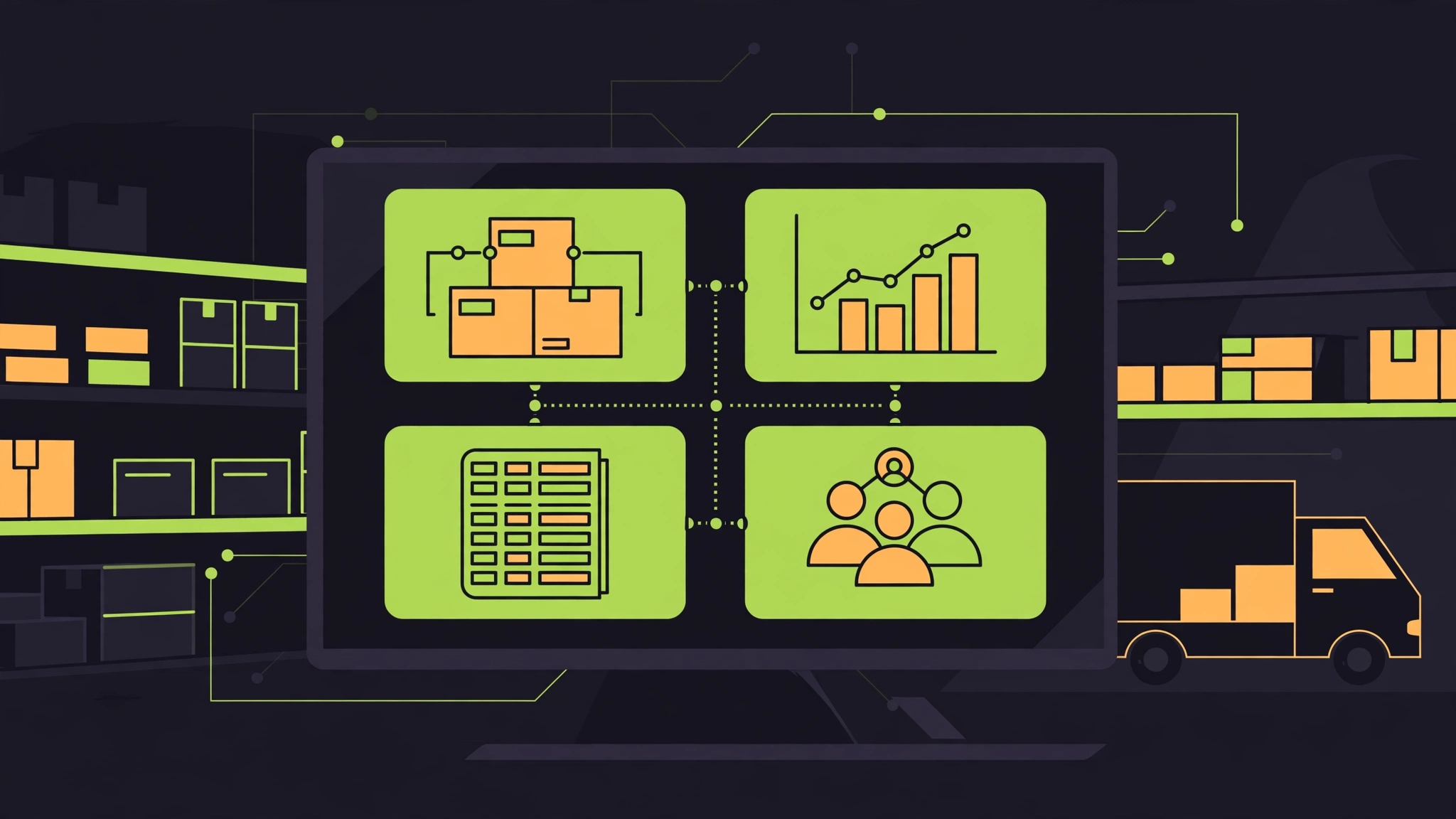
These are the modules SMB clients ask us about most, with planning ranges for a clean, single-country build. Multi-branch, multi-currency or heavy-integration versions sit at the top of each range or above it.
| Module | What it covers | Planning range (USD) |
|---|---|---|
| Core platform & user management | Login, roles & permissions, dashboard, audit trail | $4,000 – $8,000 |
| Inventory & warehouse | Stock, warehouses, transfers, low-stock alerts, barcode support | $5,000 – $12,000 |
| Sales & CRM | Quotes, orders, invoices, customer history | $4,000 – $10,000 |
| Purchasing & suppliers | Purchase orders, supplier records, approvals | $3,000 – $7,000 |
| Accounting & finance | Chart of accounts, payables/receivables, reports, tax handling | $6,000 – $15,000 |
| HR & payroll | Employee records, attendance, leave, payroll runs | $4,000 – $10,000 |
| Manufacturing / production | Bills of materials, work orders, production planning | $7,000 – $18,000 |
| Point of sale (POS) link | Retail checkout feeding the same stock and accounts | $4,000 – $9,000 |
| Reports & business intelligence | Custom reports, exports, management dashboards | $3,000 – $8,000 |
| Integrations (each) | E-commerce, payments, ZATCA, shipping, third-party APIs | $1,500 – $5,000 each |
A typical first phase for a growing trading or retail business — core platform, inventory, sales and accounting — adds up to roughly $19,000–$45,000 of build before integrations and migration. That phased start is deliberate; see below.
Custom ERP vs Odoo vs NetSuite: the honest comparison
Custom is not always the right answer, and a vendor who never says that is selling, not advising.
- Choose off-the-shelf (Odoo, Zoho, similar) if your processes are standard, you need to start this month, and per-user monthly pricing stays cheaper than a build at your team size. You will adapt some processes to the software — accept that trade consciously.
- Choose a platform like NetSuite if you are a larger, multi-entity operation and can carry enterprise licence and implementation costs; it is powerful and priced accordingly.
- Choose custom if your workflow is your competitive advantage (unusual pricing, approvals, production or fulfilment logic), if per-user licence fees at your headcount overtake build cost within 2–3 years, or if you need integrations the platforms handle badly. With a custom build you own the code and the IP — no per-seat rent, forever.
The hidden costs nobody quotes
- Data migration & cleanup — budget real days for this; spreadsheets always contain duplicates and dead records.
- Training & change management — the best ERP fails if the warehouse team keeps a shadow spreadsheet. Plan go-live support.
- Maintenance after launch — software is not finished at launch. Budget 15–25% of the build cost per year for updates, fixes, backups and small improvements.
- Compliance changes — tax and e-invoicing rules change (ZATCA phases in Saudi Arabia are a live example); your ERP must change with them.
How long does a custom ERP take?
A focused first phase (3–4 modules) typically runs 10–16 weeks from signed scope to go-live: discovery and process mapping, UI/UX, build in sprints, QA against your real data, then a supported launch. Multi-module, multi-branch builds run 5–9 months. Beware any quote that promises a full ERP in four weeks — something in that sentence is not true.
Phase it, don’t big-bang it
The pattern that works — and the one we build by — is: Phase 1 the modules that stop the daily pain (usually stock + sales + accounting), go live, let the team settle; Phase 2 add HR, purchasing, manufacturing or POS once the core is trusted; Phase 3 integrations and BI. Each phase is separately scoped and separately quoted, so you can stop after any phase with working software you own. This is also how MaxCore engages generally: Discovery → UI/UX → Agile Build → QA → Launch → Support & Scale, with milestone-based payments (USD/SAR/AED) and full IP transfer on final payment.
Frequently asked questions
Is a custom ERP worth it for a 20-person company? It can be, if licence fees for 20 seats plus the workarounds for processes the platform can’t model cost you more over 2–3 years than a focused build. Under ~10 users with standard processes, off-the-shelf usually wins.
Do we own the ERP after it’s built? With MaxCore, yes — full IP transfer on final payment is in our standard terms, along with a mutual NDA. Ask any vendor this question in writing before you sign.
Can a custom ERP handle ZATCA e-invoicing? Yes — ZATCA Phase 2 integration is an integration module like any other, and it is one of the most common reasons Saudi businesses outgrow generic tools.
What do you need from us to give a real quote? A 30-minute scoping call and your current process (even if it lives in spreadsheets). We return a fixed-scope quote with phases — no obligation.
Get a scoped number for your business
Averages don’t build systems. If you want a fixed-scope, phased quote for your module list, book a free 30-minute scoping call: https://calendly.com/maxcorepk/30min — or tell us what you’re building via the form at maxcoretechnologies.com and we reply within one business day.
About the author: Muhammad Assadullah is CEO of MaxCore Technologies, a product engineering studio in Multan, Pakistan (since 2019; 199+ projects delivered for 350+ clients, including 13 projects across Saudi Arabia, the UAE and Oman). MaxCore builds AI platforms, business systems (ERP/POS/booking), web and mobile products for clients worldwide.
Researched and drafted with AI assistance; reviewed and approved by the author before publishing. Cost figures are planning ranges for scoping, not quotations.








Add comment